

The Row Totes in Close Comparison: Park, Marlo, Alger and More
Which tote should you be buying? Settling that is far less obvious here than it is at other labels, as the row bags are not built around a self-evident good-better-best ladder. The range offers no ranking by logo, no signature pattern reserved for the senior versions, and no external hardware to tell you which model ranks above the rest. Set a $900 tote beside a $6,900 one and the visual grammar is identical. What divides them is leather grade, structure, size and the amount of handwork the construction calls for. This comparison sets the tote families side by side using observed 2026 market prices, so you can see exactly what the extra thousands are buying.
Fix the Capacity Question First
Every sensible tote decision starts with volume before any model name. The range runs from a small structured carrier to a genuinely oversized weekend piece, and the gap between those extremes is wider than most assume. There is a house sizing convention worth committing to memory: where a number appears in a model name, it is the bag’s width in inches, which is why Marlo 12 and Marlo 14 are two inches apart across the top. That convention reaches from Margaux 10, 12 and 15 to India 10.00 and Agnes 15. With the width fixed, the shortlist collapses to two or three candidates in moments. What follows is only material and budget.
The Park Family: The One Everyone Is Reaching For
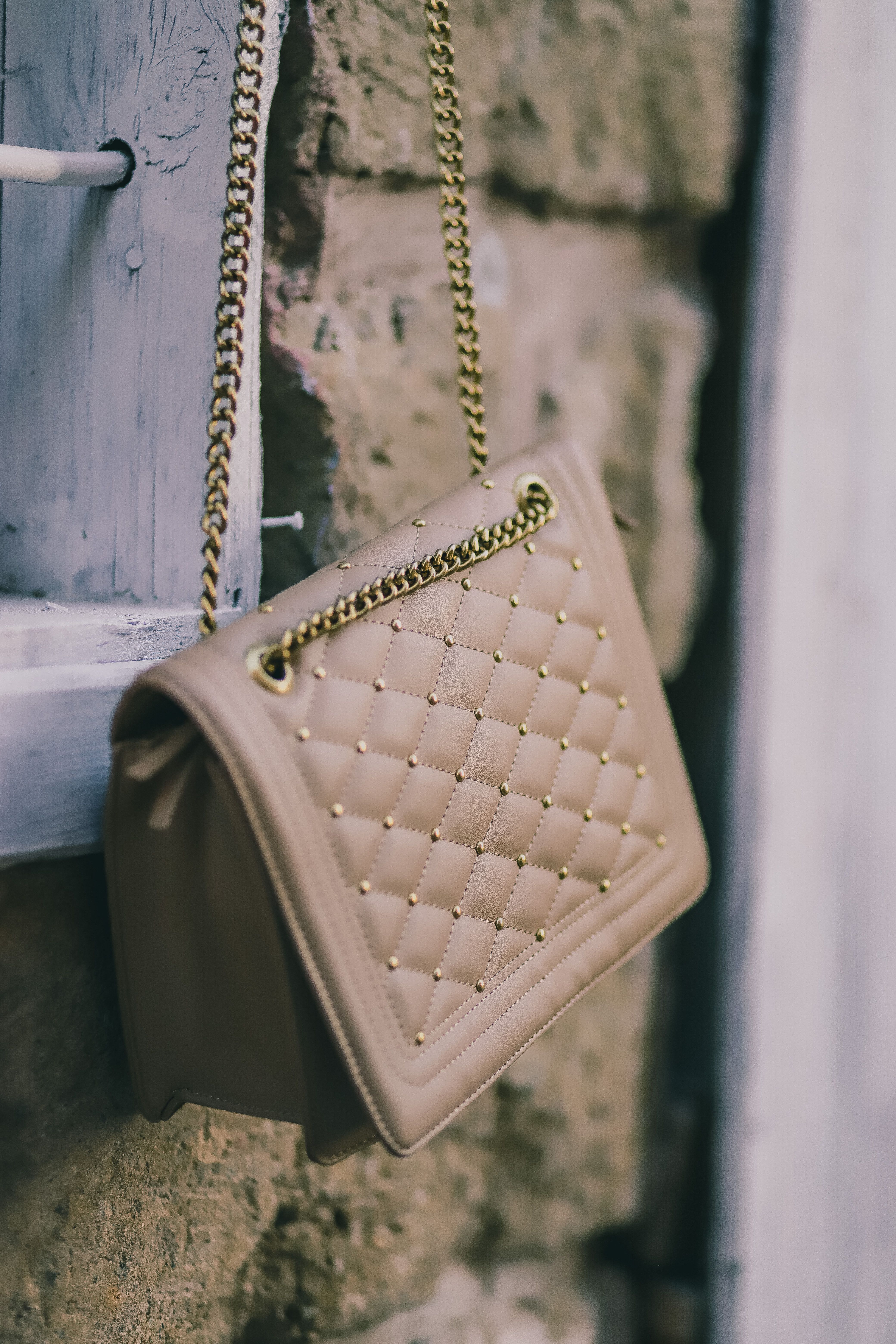
Say the row tote bag to most people and they think of something from the Park group. No group in the range is more visible and the reason a the row handbags small tote bags soft-sided carrier hardened into a recognisable silhouette. The family is exactly four bags plus a crossbody: the N/S Park Tote, the Park Tote, the Park Tote Three and the XL Park Tote, with the N/S Park Crossbody sitting beside them. Names the brand does not make drift about online, so specificity pays. They all share the same design logic: no exterior plaque, no monogram, palladium-plated matte hardware, recognition by proportion alone. The differences between them are dimensional and material rather than decorative.
N/S Park Tote
The N/S Park Tote is the family’s centre of gravity, drawn tall and north-south. Pricing observed in 2026 sits at roughly $1,550 to $1,620 for the small, $1,650 to $1,950 for the medium and $1,990 to $3,250 for the large. Those are ranges rather than single figures because material changes the number considerably within one size. The large in particular spans an unusually wide band, which means the same silhouette is offered in noticeably different hides. This is also the model with the strongest documented resale record in the whole range, which is worth weighing if resale matters to you. Most buyers will find the medium the practical everyday choice.
Park Tote, Park Tote Three and XL Park Tote
The standard Park Tote lands a little under the N/S on observed pricing, at roughly $1,450 to $1,620 across small and medium. The Park Tote Three is offered in edge, stitch and canvas treatments and runs about $1,750 to $2,400 depending on which of those you choose. Observed pricing put the XL Park Tote at $2,490 and the XL Stitched at $4,570, which is the plainest illustration of what handwork costs here. The family and the silhouette are the same; the price is nearly double, and the difference is construction rather than size. If you want the largest format without the stitched premium, the plain XL is the obvious pick. Take the stitching and the price reaches flagship money for a tote.
Marlo: Structure Instead of Slouch
Marlo is built to a different brief. Park reads soft and collapsible, Marlo structured and considerably more formal, and its pricing reflects that at once. Observed 2026 pricing places Marlo 12 at $3,600 and $4,900 depending on material, Marlo 14 at $5,300, and the Marlo Tote at $4,300 with a canvas version at $5,600. Notice what that implies: the canvas version costs more than the standard leather one, which is a useful reminder that material premiums in this range do not follow a simple leather-beats-fabric rule. Marlo 12 to Marlo 14 is a two-inch width difference for several hundred dollars more. Pick Marlo if you want a tote that holds its shape empty and reads as a work bag, not a carryall.
Alger, Marco and Where the Range Tops Out
Above Marlo sit the two pieces that define the ceiling. The Alger Tote was observed at $4,900 and the Marco Bag at $6,900, which puts them in the same territory as the Margaux Shoulder 12 at $4,900 and the Iowa Duffle at $5,180. At this level the money does not buy capacity beyond what a large Park already offers. What it buys is leather grade, structure and the hand-finishing the construction requires. These are the pieces most often cited in any list of top row bags, and the slowest sellers, because the value case is subtle. Should the difference between a $2,490 tote and a $6,900 one be invisible across a room, that is by design, and probably your answer.
The Quieter Options Most Overviews Leave Out
A proper row bags overview should not stop at the headline families, because several of the most useful totes sit outside them. The Boone Tote came in at $900 and the Large Boone at $950, the least costly way into the format. Brian Tote figures landed at $1,100 and $1,200, and Tori at $1,800. Outside leather the sisal family sits at roughly $1,400 to $2,200, with a Georgia linen tote at $1,750 and a Geogica raffia tote at $2,500. On the smaller side sit the Cecily Mini Tote at $950, the Mini Barn Tote at $1,200 and a Small Kit Tote at $2,200. They suit buyers who want the design language without the leather outlay.
- Entry price: Boone Tote at $900, Large Boone at $950.
- Leather for every day: Brian Tote at $1,100 to $1,200, Tori at $1,800.
- Fabric and seasonal: sisal $1,400 to $2,200, linen $1,750, raffia $2,500.
- The small end: Cecily Mini Tote $950, Mini Barn Tote $1,200.
The Complete Comparison at a Glance
The table gathers the observed 2026 prices so the families can be read against one another directly. Read each figure as a point-in-time market observation rather than an official tariff, as the brand publishes no master price list. A range reflects real variation across materials within one size, not uncertainty about the number. Start with the price column, then move across to character. Notice how far the top of the Park range overlaps the bottom of Marlo. Most buyers hesitate exactly in that overlap.
| Model | Observed 2026 price | Feel | Best for |
|---|---|---|---|
| Park Tote (S/M) | $1,450-1,620 | Soft and collapsible | Casual carry |
| N/S Park Tote Small | $1,550-1,620 | Tall cut | Compact commute |
| N/S Park Tote Medium | $1,650-1,950 | Tall proportion | The obvious default |
| Park Tote Three | $1,750-2,400 | Three treatments: edge, stitch, canvas | Choosing a material |
| N/S Park Tote Large | $1,990-3,250 | The full size | Working and travelling |
| XL Park Tote | $2,490 | Outsized | Maximum volume |
| Marlo 12 | $3,600 / $4,900 | Structured | Formal working days |
| Marlo Tote | $4,300 (canvas $5,600) | Holds its shape | Making a statement |
| XL Park Tote Stitched | $4,570 | Finished by hand | Paying for craft |
| Alger Tote | $4,900 | The flagship tote | Buying at the top |
| Marlo 14 | $5,300 | Marlo at its widest | Width above all |
| Marco Bag | $6,900 | Top of the range | Collector purchase |
What the Resale Data Shows About Totes
Resale is where the tote conversation gets really interesting, and one figure dominates it. Rebag’s CLAIR 2025 report recorded the N/S Park Tote at 146% value retention, the strongest performer in the entire brand study. The same report put The Row at 97% retention brand-wide, crossing into the unicorn tier of 85% and above for the first time, behind only Telfar, Hermes and Goyard, with the Margaux Tote at 107%. All of that is observed market behaviour and nothing more, so treat it as context rather than investment advice or a promise about future value. Nor does it apply across the board: canvas, nylon, sisal and seasonal-colour pieces discount routinely on the secondary market. Strength sits with black and neutral calfskin in the signature silhouettes, a narrower story than the headline number suggests.
How to Choose, in Four Steps
Work through it in order instead of browsing by price and the decision becomes straightforward. Fix your width first, because the number in the model name tells you exactly what you are getting. Next comes structure or slouch, a choice that separates Marlo from Park more cleanly than anything else. Then choose material, remembering that canvas can cost more than leather within the same family and that textile pieces behave differently over time. Leave price until last, when it applies to two or three options instead of fifteen. Below is the same process in short form.
- Decide the width in inches before names enter the picture.
- Pick structured Marlo or soft-sided Park.
- Settle the material, remembering canvas sometimes costs more than leather here.
- Set the two or three survivors side by side on observed price.